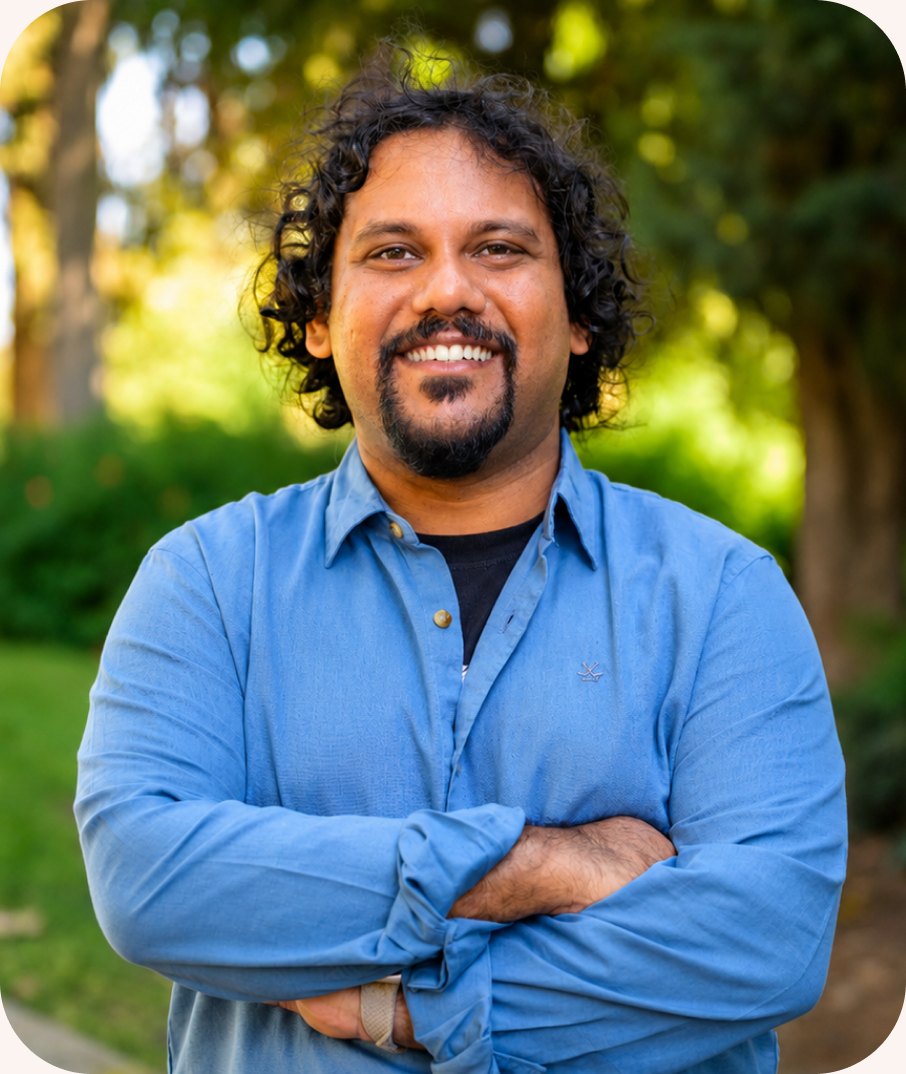

Meet Dr. Saikat Ray, originally from Kolkata, India. He explores one of neuroscience’s most profound questions: How does the brain represent the real world and our place within it?
Saikat began his postdoctoral research in Prof. Nachum Ulanovsky’s lab in the Department of Brain Sciences by building a “bat cave,” where small groups of bats lived for months while he and his colleagues investigated how the brain encodes social relationships. Their work revealed something remarkable: the same brain cells that tell an animal where it is in space also map who it is with – friends, rivals or dominant individuals – forming a kind of “social GPS.” The study was published in Science
in 2025.
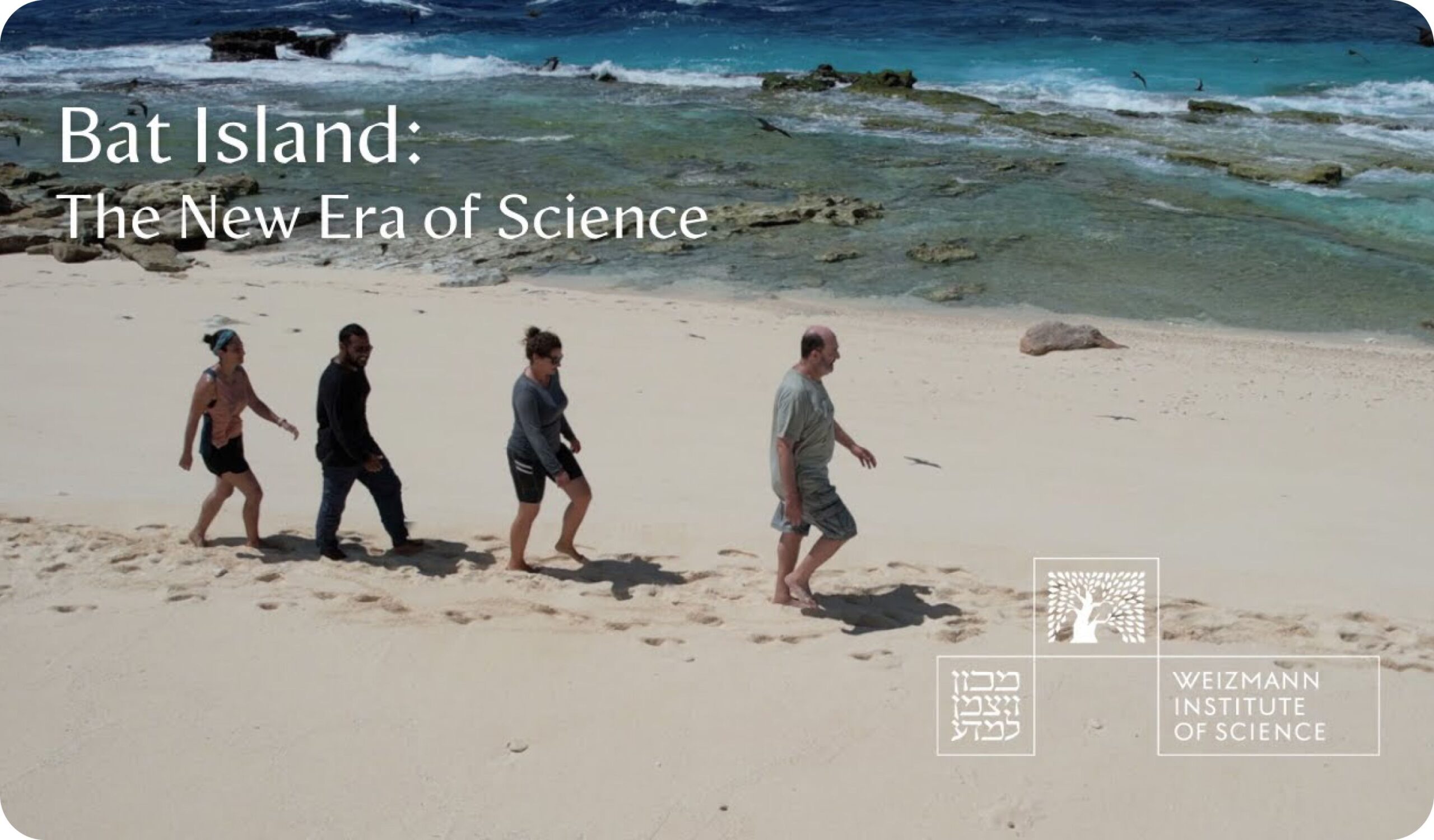
The next step was to move beyond the lab and take part in one of the most adventurous neuroscience projects ever attempted. Saikat and his colleagues brought their research to a remote island near Zanzibar, where they camped for weeks while recording brain activity in wild bats navigating under the night sky.
“It was the first time anyone had recorded single neurons in free-ranging animals in the wild,” he explains. “We found that the brain’s compass – the system that tracks orientation – functions remarkably well even across vast natural spaces, despite changes in the night sky, such as the presence or absence of the moon.” Saikat’s second postdoctoral paper with Prof. Ulanovsky was also published in Science in 2025.
Saikat’s path to neuroscience was, fittingly, shaped by curiosity and serendipity. “While visiting my family in Kolkata during my undergraduate studies in engineering, I was wandering through what is said to be the world’s largest secondhand book market. There, I came across two books that caught my attention: one on quantum mechanics and the other on neural networks. I could only afford one, so I chose the one on neural networks,” he recalls. “That decision probably changed my life.”
After completing his PhD in Berlin and spending a decade in Europe, he came to the Weizmann Institute of Science. “I was interested in studying natural behavior through neuroscience, an area that Prof. Ulanovsky was also deeply interested in. I had also met him and members of the lab at conferences and got along with them very well.
“The science here is world-class,” he says, “but the people make it even more special. Everyone helps each other. We work hard and celebrate together, whether in the lab after publishing a paper or out in nature on a hiking or camping trip.”
For Saikat, Israel feels like a fascinating intersection of his two former homes, “somewhere between India and Germany,” as he puts it.
“The chaos reminds me of India. The precision of the research reminds me of Germany. And then there’s combina, the Israeli version of India’s jugaad – creative problem-solving when things don’t go as planned.”
When he is not in the lab, Saikat can usually be found traveling, sometimes for work and often simply to explore the world.
“Living in different societies changes how you see everything,” he reflects. “It gives you perspective and a sense of connection.”
Saikat hopes to begin the next chapter of his scientific journey soon by establishing his own lab to study suricates (meerkats) in the deserts of South Africa. “They’re incredible animals, full of personality and complex social behavior,” he says. “No one has ever recorded their brain activity before. That’s the frontier I’m heading towards, where science meets the wild.”