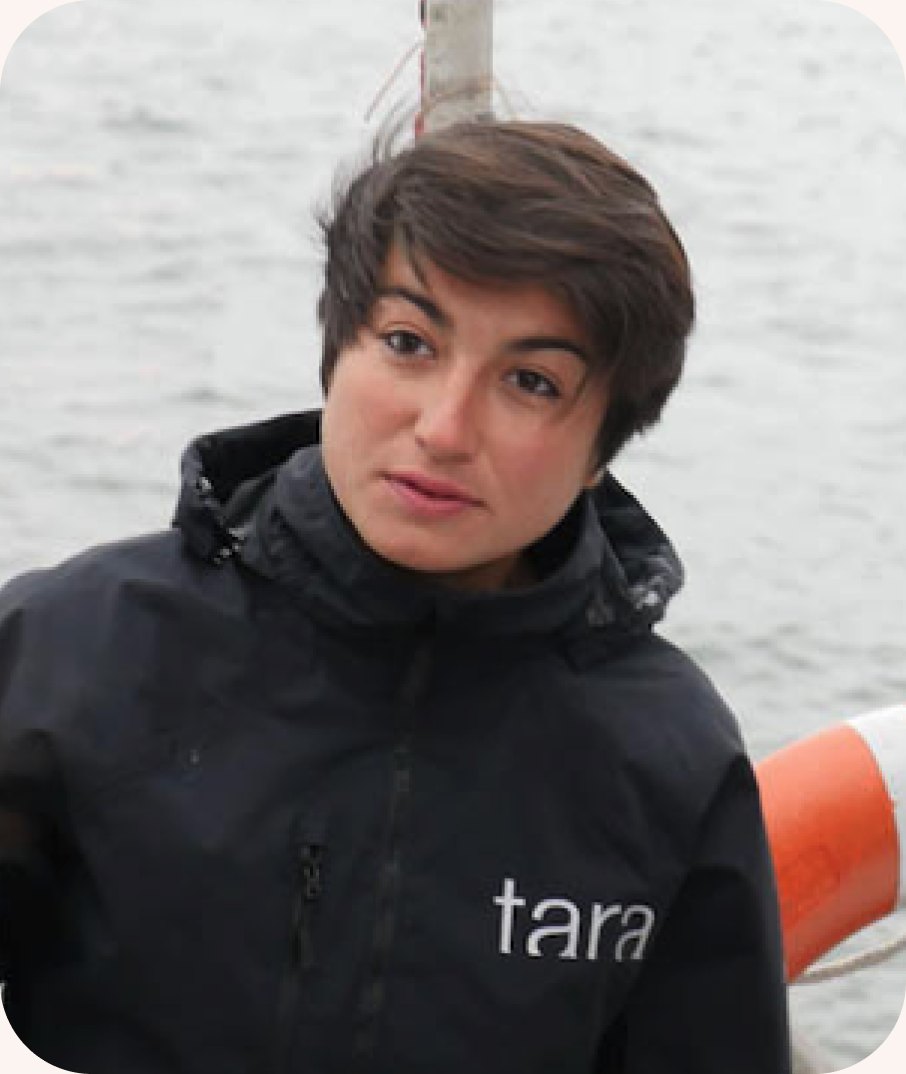

Dr. Flora Vincent, a marine microbiologist by training, was born in the southeast of France, in the beautiful town of Aubagne near Marseille. She says her childhood memories of dreamy summer holidays by the sea, together with years spent working as a diving instructor, likely influenced her decision to become a marine biologist.
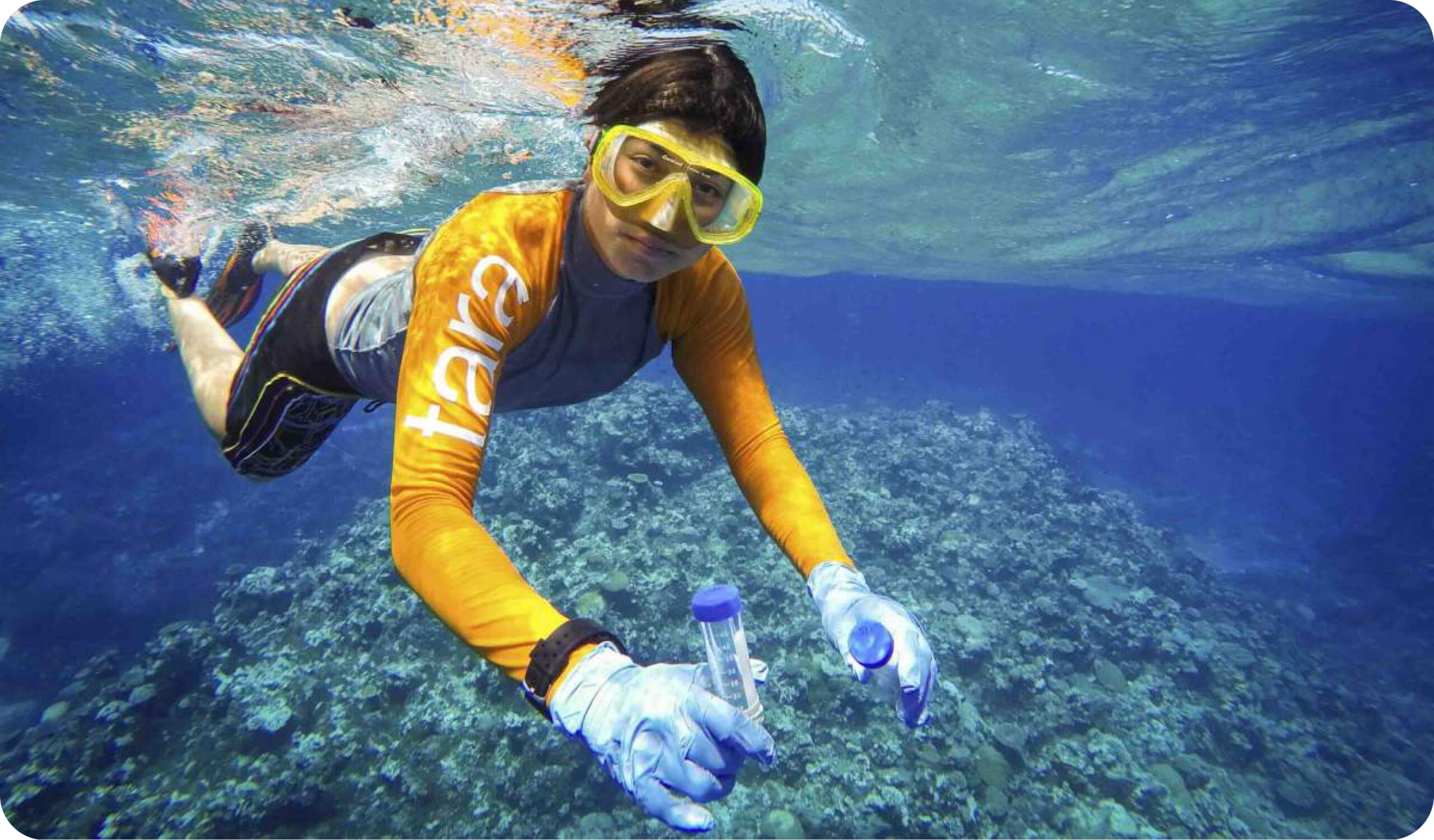
After receiving her BSc in agronomy, she spent six months at the Okinawa Institute of Science and Technology in Japan, working on coral research with a team of physicists. The following six months took her to French Polynesia, where she worked on coral reef fish at a CNRS (French National Research Center) field station. Convinced that marine science was her future, she returned to France to pursue a PhD in marine microbiology at the École Normale Supérieure in Paris, as part of the Tara Oceans project.
Following her PhD, Vincent spent four and a half years as a postdoctoral researcher in Prof. Assaf Vardi’s laboratory in the Department of Plant and Environmental Sciences at the Weizmann Institute of Science. During her postdoctoral fellowship, she was awarded an Excellence Fellowship for International Postdoctoral Researchers from the Israeli Academy of Sciences and Humanities.
At Weizmann, Vincent investigated the marine phytoplankton Gephyrocapsa huxleyi, a microscopic alga responsible for vast ocean blooms visible even from space. These blooms are often terminated within weeks by viral infections. Her research focused on understanding the impact of these infections, from the dynamics of virus-host interactions at the single-cell level to their influence on large-scale processes such as the global carbon cycle. These blooms play a crucial role in Earth’s ecosystems by producing oxygen, recycling carbon dioxide, and supporting marine food webs.
Reflecting on her time at Weizmann, Vincent said: “A key element of those four and a half years was how easily we communicated, both within our lab and across different labs. Combined with the outstanding core facilities, it made everything better and faster, the science, the collaboration, the learning. I also appreciated how scientists at Weizmann ask a lot of questions and are very straightforward; it makes science incredibly lively, and encourages out-of-the-box ideas.”
One highlight of her postdoctoral years was participating in major international field campaigns. After helping coordinate a month-long sampling campaign in Norway in 2018, she was appointed Chief Scientist aboard the Tara research vessel in 2021, leading an expedition to study coccolithophore blooms off the coast of Argentina. “Field trips are amazing. They can be intense, revealing the most authentic parts of yourself and others. It was an unforgettable scientific experience, and the science we conducted there was truly unique. Field research contributes enormously to understanding the processes we study and their impact on the marine environment.”
The scientific questions Vincent pursued during her postdoctoral research have continued to shape her career. After completing her fellowship at the Weizmann Institute of Science, Vincent joined the European Molecular Biology Laboratory (EMBL) in Heidelberg, Germany, where she is now a Group Leader in the Developmental Biology Unit. There, she continues to collaborate with the Tara Oceans initiative through EMBL’s flagship TREC (Traversing European Coastlines) expedition, using a state-of-the-art mobile laboratory to investigate phytoplankton and microbial communities directly in their natural environment. “I’m really fascinated by trying to understand how those organisms interact in their native context: this is what I’ve been dreaming of doing since the end of my PhD,” she says.
Curiosity continues to drive Vincent’s scientific journey. “As a scientist, my curiosity is pretty endless. Of course, understanding marine biology and our connection to it is a major source of excitement for me, but that curiosity extends across the natural sciences. I’m just as fascinated by how octopuses change color, the discovery of new planets, or the evolution of language. Climate change and gender studies are also important topics to me.”
Outside the lab, Vincent enjoys discovering new places, especially through their food, hiking with friends, swimming, and engaging in lively discussions about societal issues, an interest that led her to co-author a book during her postdoctoral fellowship exploring how algorithms become gender biased.