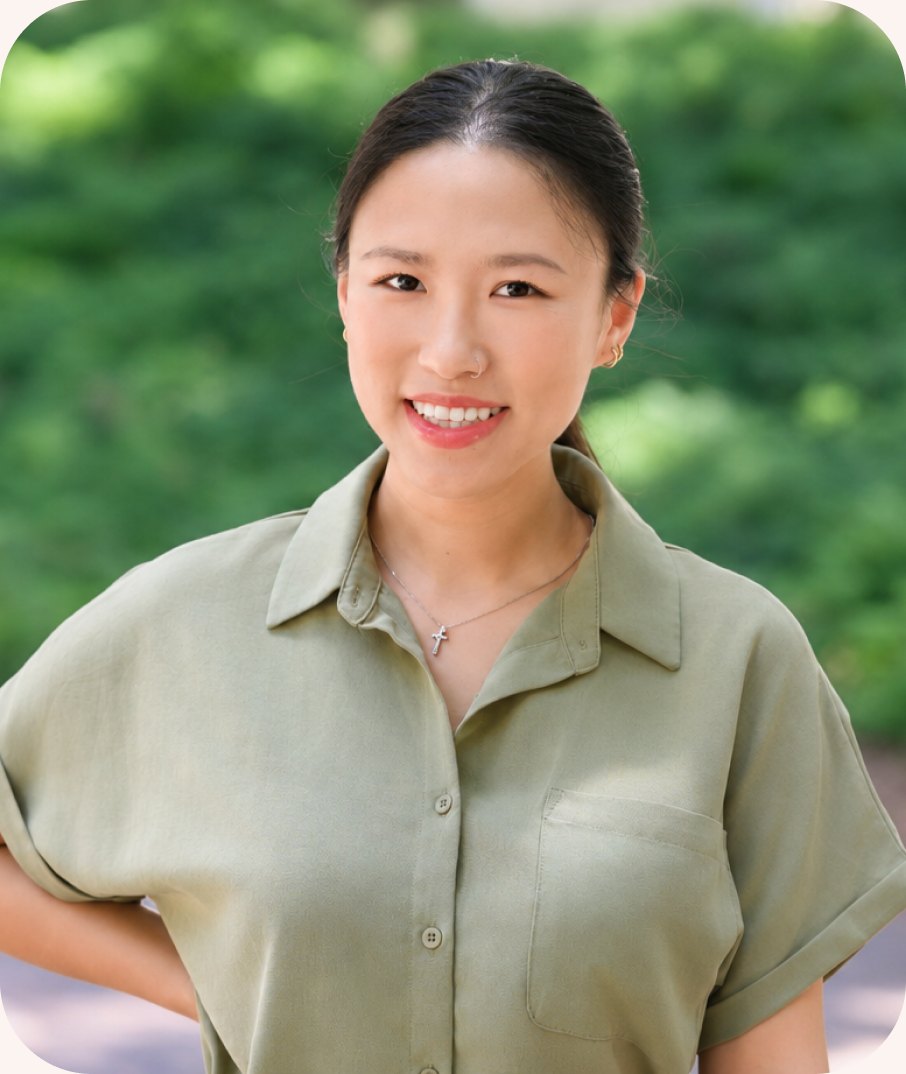

For Yumi Minyi Yao, home has never been defined by a single place. “Home is basically wherever my cat Laffa and I are together,” she says. Born in Wuxi, China, she moved to Shanghai on her own as a teenager, continued her studies in the United Kingdom, and eventually found her scientific home at the Weizmann Institute of Science.
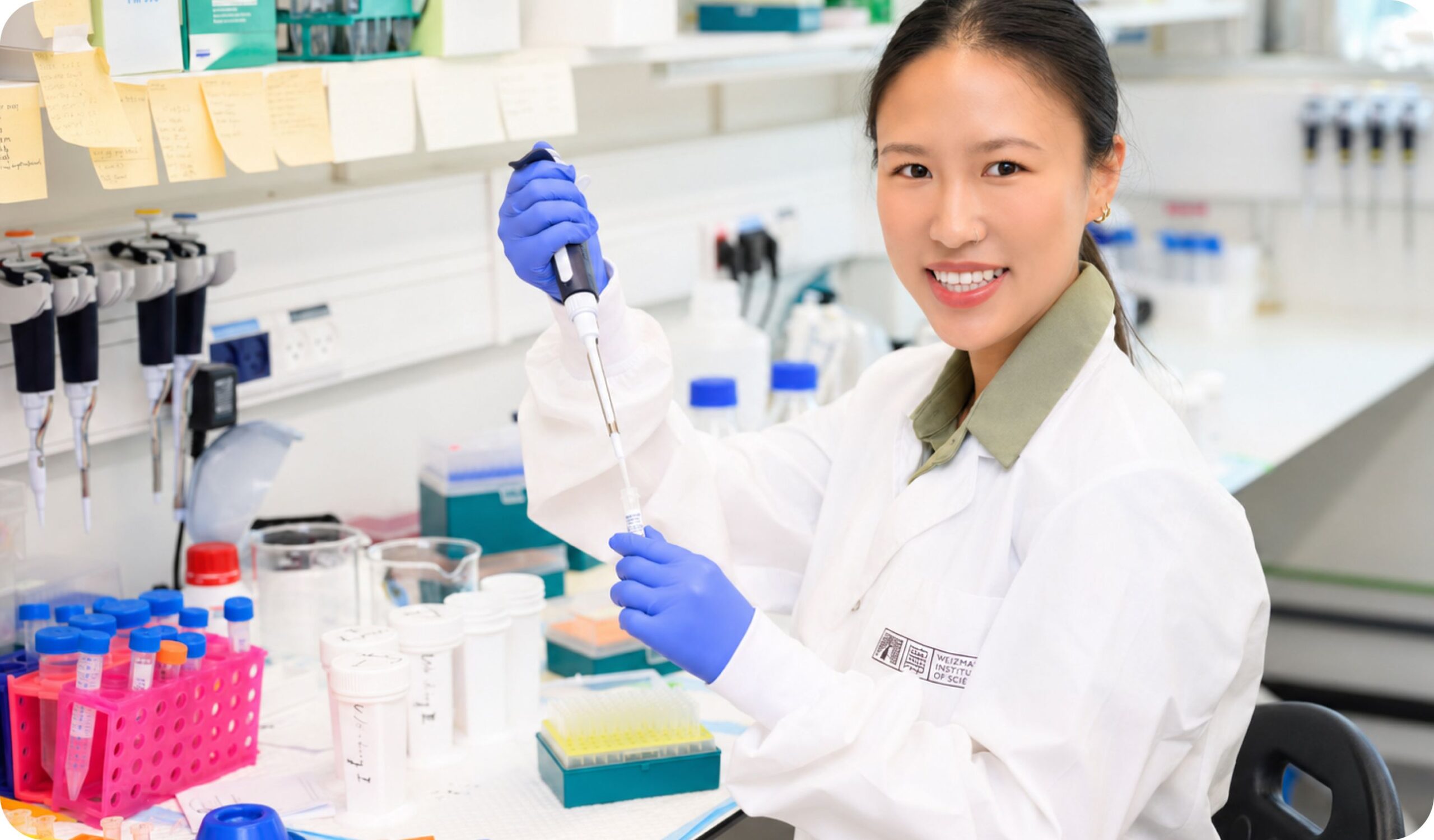
Yumi began her PhD in Dr. Ariel Afek’s lab in the Department of Chemical and Structural Biology at the Weizmann Institute at a unique moment: the lab itself was still being formed. Rather than stepping into an established environment, she became part of the process of creating one, learning, experimenting, and building alongside her colleagues from the very beginning. “It was super fun working with my colleagues every day and building the lab together, we are from very diverse scientific backgrounds, and we learn so much from each other all the time,” she says. “We are a highly international group and a true cultural melting pot, which makes the lab not only a place to do great science, but also a place to share traditions, perspectives, and ideas from all over the world.”
Her research focuses on one of biology’s most fundamental questions: how proteins recognize and interact with DNA. Rather than viewing DNA only as a sequence of genetic information, Yumi studies it as a dynamic physical molecule that changes shape and responds to its environment.
“I love beautiful things,” she says when describing what first drew her to science. As a child, she was fascinated by the cover of a chemistry textbook showing flames burning in different colors. Learning that each color came from a specific element or reaction revealed to her that the beauty of the world is connected to an underlying logic, a realization that still drives her research today.
Her journey to Israel began long before her PhD. During her studies at the University of Oxford, she spent summers exploring the country, studying Biblical Hebrew, and working in a medical research environment. Over time, Israel became not only a scientific destination but a place where she felt a growing personal connection. Life in Israel also became a cultural learning experience. Arriving at 18, she initially experienced surprise and confusion, including discovering that everything was closed on Shabbat in Jerusalem. Over time, she learned to approach cultural differences with curiosity rather than frustration.
What once felt unfamiliar became part of what she appreciates most: the directness, openness, and energy of Israeli culture. That same openness is something she has found throughout Israel’s scientific and biotech community. “I’m genuinely fascinated by Israel’s biotech ecosystem. The country is small, so everyone knows everyone; there’s always a great event to attend or an inspiring speaker to hear. What strikes me most is how down-to-earth people are, even the most successful and busy among them are remarkably willing to share their time and experience. That combination is incredibly rare anywhere else in the world.” Being part of that community has helped shape her own ambitions for the future. “Having the privilege to be part of this community has been deeply rewarding, and it has given me the space to explore my future aspirations throughout my PhD.”
Outside the lab, Yumi continues to explore the world. She has traveled to nearly 100 countries, collects stamps and postcards from every destination, and uses photography to capture the places and people she encounters.
After completing her PhD, Yumi will join Merck KGaA, a global science and technology company, at its headquarters in Germany as Associate Director, Strategic Program Management, Life Science. Looking ahead, she is excited about the future of science, especially the growing connections between biology, artificial intelligence, engineering, and data science. She hopes to contribute not only as a scientist but as someone who connects people, disciplines, and cultures.
Recognition
Yumi’s scientific and innovation journey has received international recognition. In 2026, she was selected for Forbes Israel’s 30 Under 30 list and was chosen as a Next-Gen Science speaker at the Lindau Nobel Laureate Meeting, where she presented her research on DNA mechanics and protein recognition.