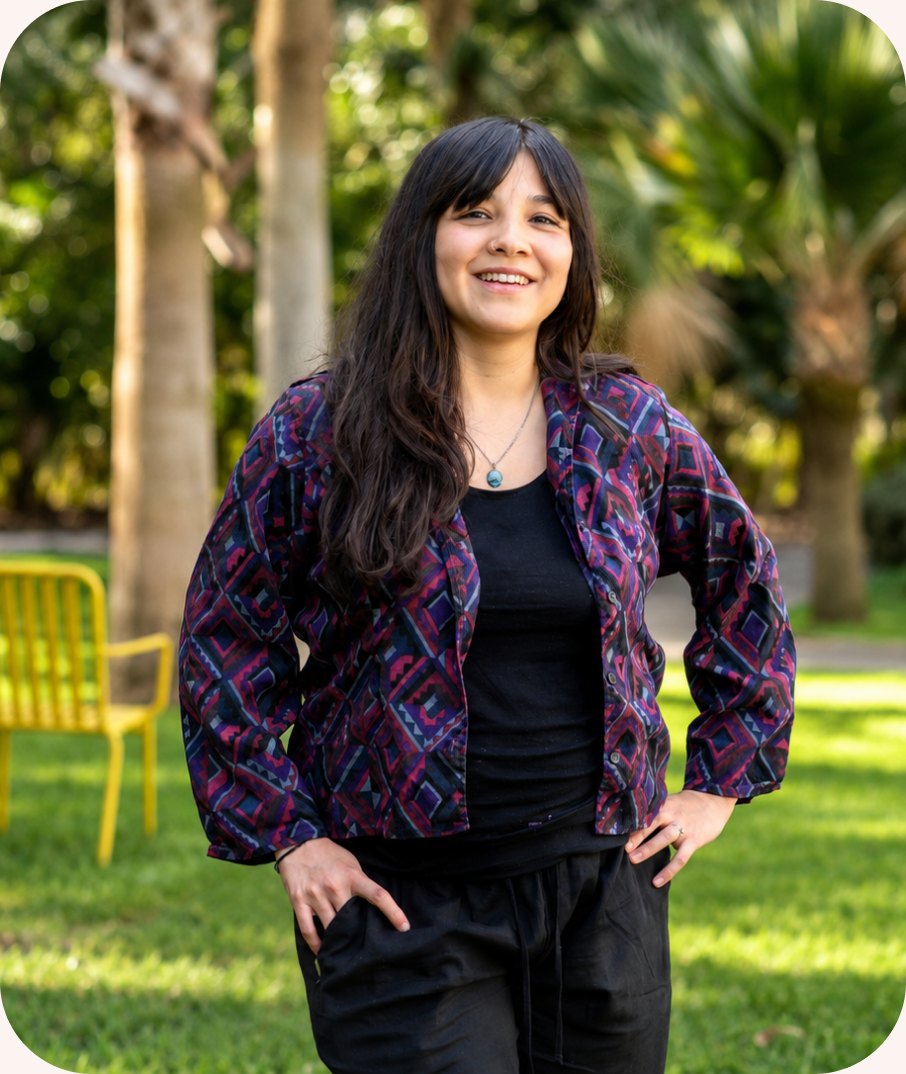

When Prof. Ada Yonath, Nobel laureate in Chemistry, met a master’s student in Mexico City, she could not have anticipated the long-term impact of that encounter. For Alma-Carolina Sanchez Rocha, it was a rare opportunity to meet a world-renowned scientist, and above all, to hear a piece of advice that stayed with her: “Persevere and follow your own path, even when others doubt you.”
A first-generation university student, Carolina carried that message forward as her scientific path took shape. Years later, it contributed to her decision to join the Weizmann Institute of Science, where Prof. Yonath conducted her research, and Carolina is now a postdoctoral fellow.
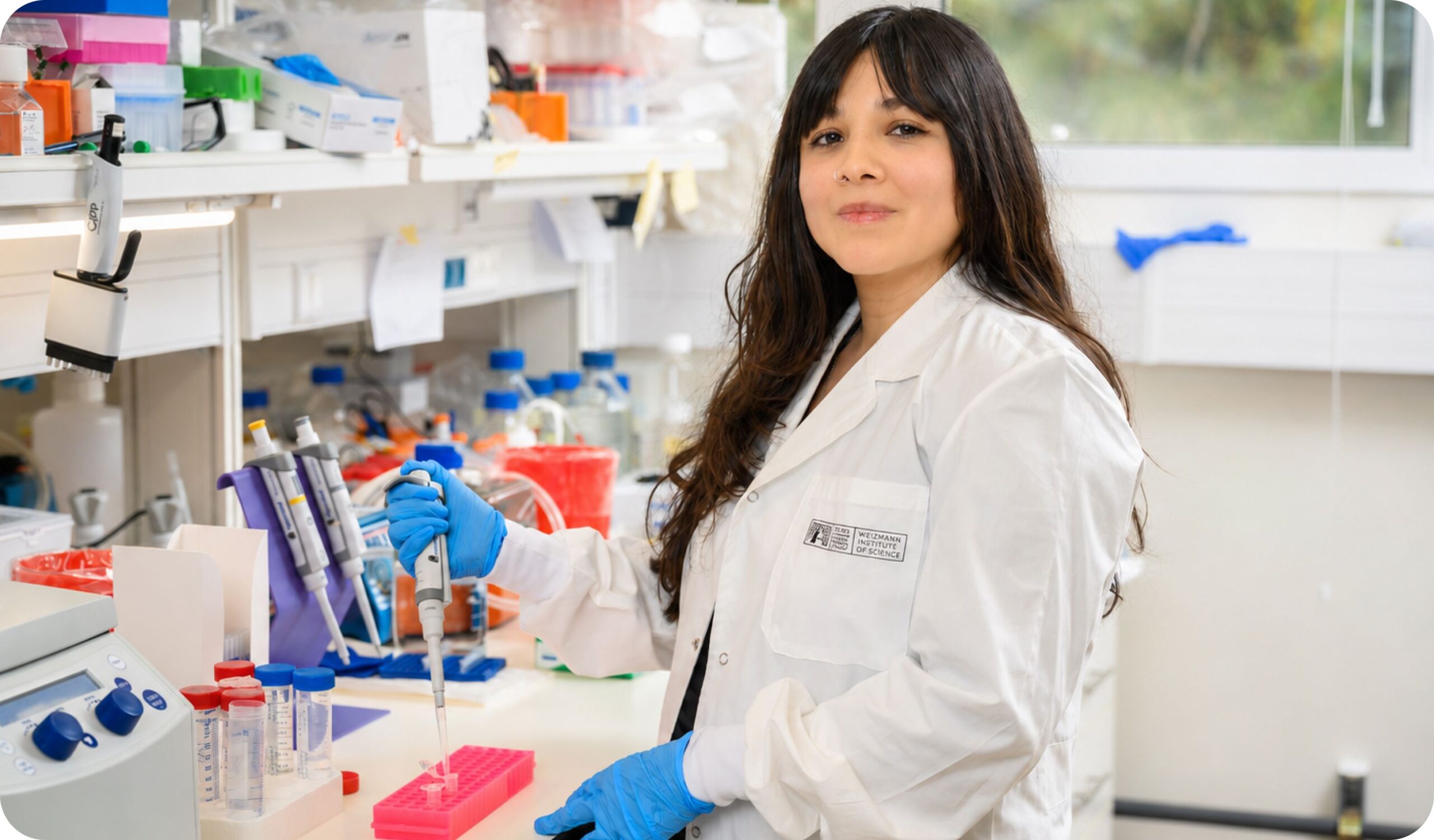
She is currently conducting her research under the guidance of Prof. Naama Barkai’s lab in the Department of Molecular Genetics and is the recipient of the international postdoctoral fellowship of the Azrieli Foundation. Her research addresses a central question in cell biology: how cells determine when and which genes to activate.
Her work focuses on gene-regulating proteins that bind DNA to control cellular programs. While traditionally viewed as structured and rigid, many of these proteins contain flexible, intrinsically disordered regions. Once considered functionally marginal, these regions are now understood to play a key role in enabling proteins to adapt, interact with multiple partners, and respond dynamically to cellular signals.
Carolinas’ interest in these questions dates to her early studies in Mexico City, where reading The Origin of Life by Antonio Lazcano sparked her curiosity about evolution and the molecular basis of life.
She went on to study biology at the National Autonomous University of Mexico and later pursued doctoral research at Charles University in Prague. There, she showed that even ancient proteins contain intrinsically disordered regions, challenging the prevailing view that early proteins were predominantly rigid. The environment at the Weizmann Institute of Science is distinctive and highly stimulating. As Carolina describes it: “My colleagues are exceptionally smart and capable, and the institute’s commitment to excellence is clearly reflected in the quality of its students and researchers. Working with Prof. Naama Barkai has taught me how to be a highly organized and rigorous scientist.”
Relocating to Israel introduced new cultural and professional dynamics, including a more direct communication style that she had come to value in scientific discourse.
Beyond research, Carolina is deeply engaged in the arts. She enjoys visiting art exhibitions in Israel and abroad, and she paints regularly, finding in the arts a complementary form of creativity and expression.
Looking ahead, she aims to uncover how intrinsically disordered proteins govern gene regulation, and how these mechanisms may open new avenues for understanding and treating human disease.
Carolina and her husband Vyacheslav Tretyachenko, also from the Institute, are proud parents of a joyful baby girl.